You may walk a short distance, but pain, fatigue, heaviness or weakness appears in your legs.
Lumbar spine · Spinal canal stenosis
Lumbar spinal canal stenosis
If you feel pain, heaviness or weakness in your legs when walking and need to stop to rest, the lumbar canal may be compressing the nerves.
Do you recognise any of these symptoms?
Lumbar spinal canal stenosis often appears mainly when walking or standing.
Symptoms often improve when you rest, sit down or lean forward.
It may affect the buttocks, thighs, calves or feet. It can also be accompanied by tingling.
Progressive weakness, stumbling or difficulty climbing stairs should be assessed.
What it is

Stenosis means there is not enough space for the nerves.
In the lumbar spine there is a canal through which the nerves travel towards the legs. Over time, osteoarthritis, discs and ligaments may gradually narrow this canal.
When the space becomes too narrow, the nerves are compressed. This may cause pain, tingling, heaviness, weakness or difficulty walking.
When to consult
It is not always urgent, but it should not be allowed to progress.
Consult a specialist if:
- You can walk less and less distance.
- Pain travels down one or both legs.
- You need to sit down for the pain to improve.
- You notice loss of strength, balance or sensation.
- Usual treatments are no longer helping.
Surgery
The aim is to release the nerves.
When stenosis significantly compresses the nerves, surgery aims to restore space. This can be done using microsurgery, endoscopic surgery or minimally invasive techniques.
If the spine is stable, we usually try to decompress while preserving structures as much as possible. If there is also instability, it may be necessary to stabilise the segment with a fusion.
You may also be interested in
Related information to better understand lumbar pain, sciatica and treatment options.
Spine
Disc herniation
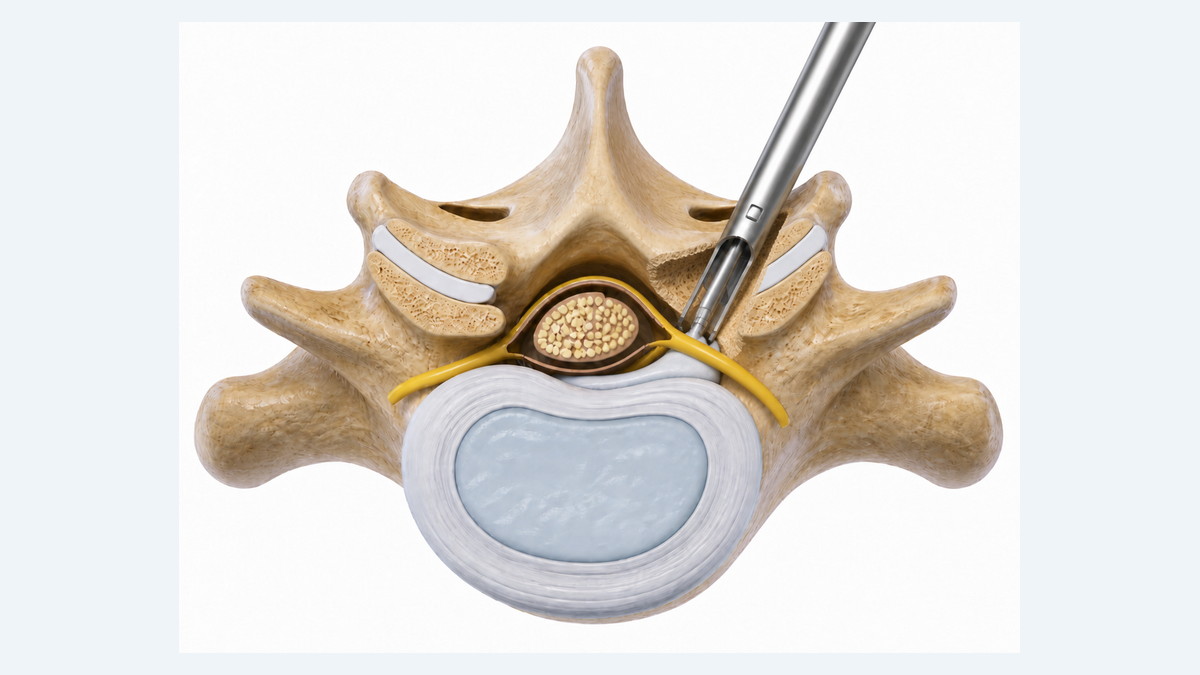
When a herniation compresses a nerve root, it may cause sciatica, tingling or loss of strength.
Read more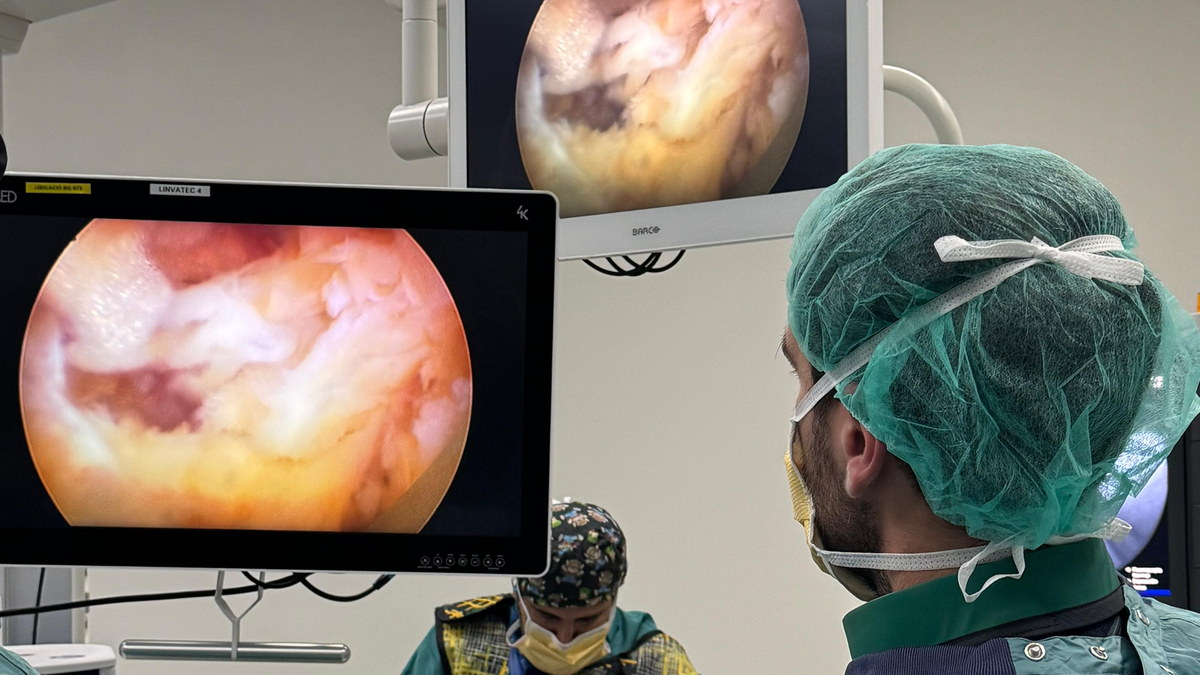
Endoscopic surgery
Endoscopic spine surgery
An ultra-minimally invasive technique for treating nerve compression in selected cases.
Read more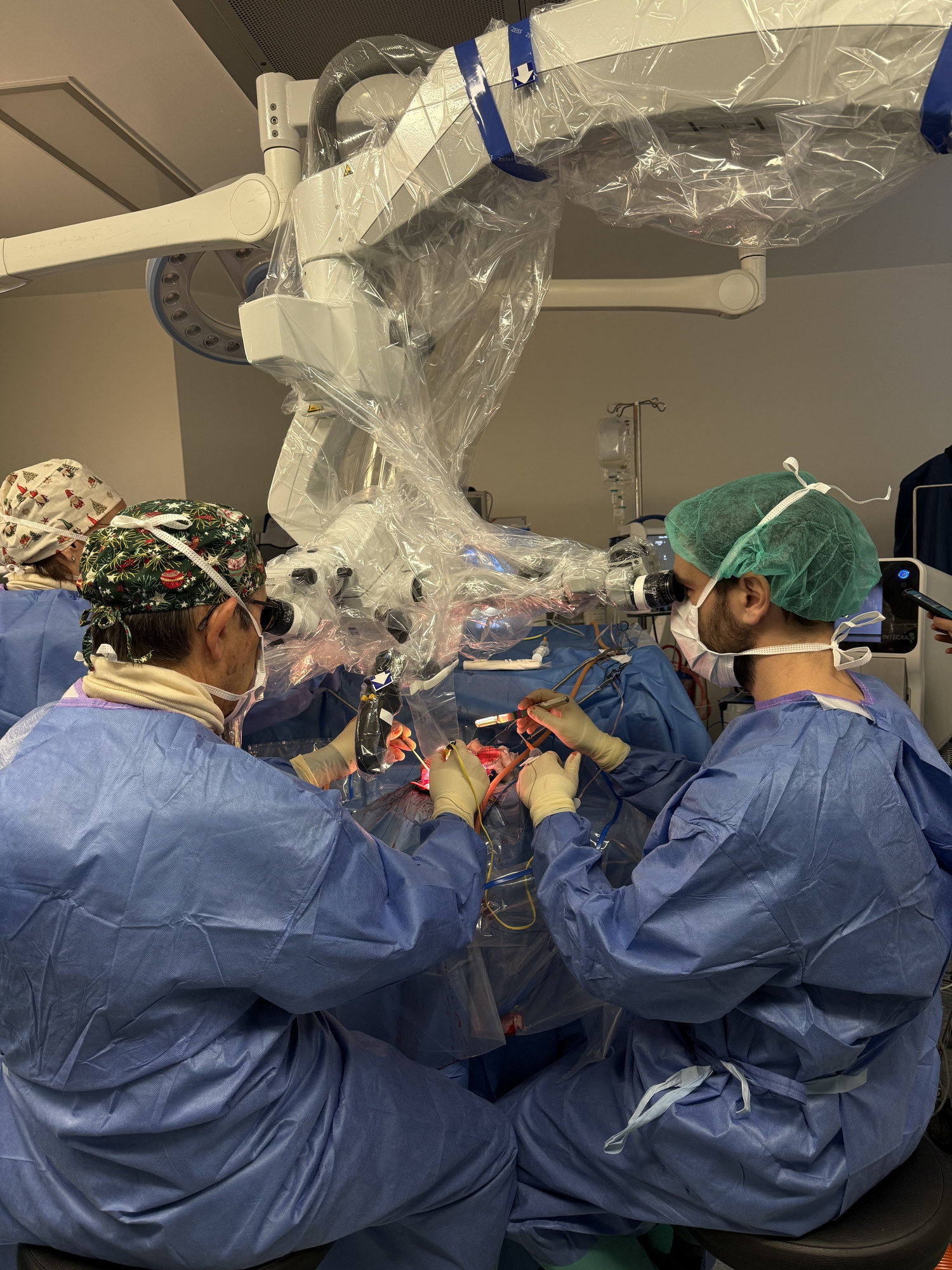
Technology
Surgical technology
Microsurgery, neuronavigation, endoscopic surgery and technology applied to precision.
Read more
Medical assessment
Would you like to know whether your case has a solution?
We review your symptoms and imaging tests to clearly explain whether this is spinal canal stenosis and what real options are available.