Especially when there is mild or moderate osteoarthritis, chondropathy or recurrent inflammation.
Traumatology · Regenerative medicine
Biological treatments
If you have joint pain caused by osteoarthritis, overload or tendon problems, certain injections may help control inflammation and improve function without initially resorting to surgery.
Do you recognise any of these situations?
Biological treatments are not magic and do not always replace surgery, but they may be useful in selected stages of joint or tendon pain.
In some cases they may help control symptoms before surgery needs to be considered.
They may be considered in selected tendinopathies, bursitis or periarticular pain.
When physiotherapy, medication or activity changes do not control pain well enough.
What they are
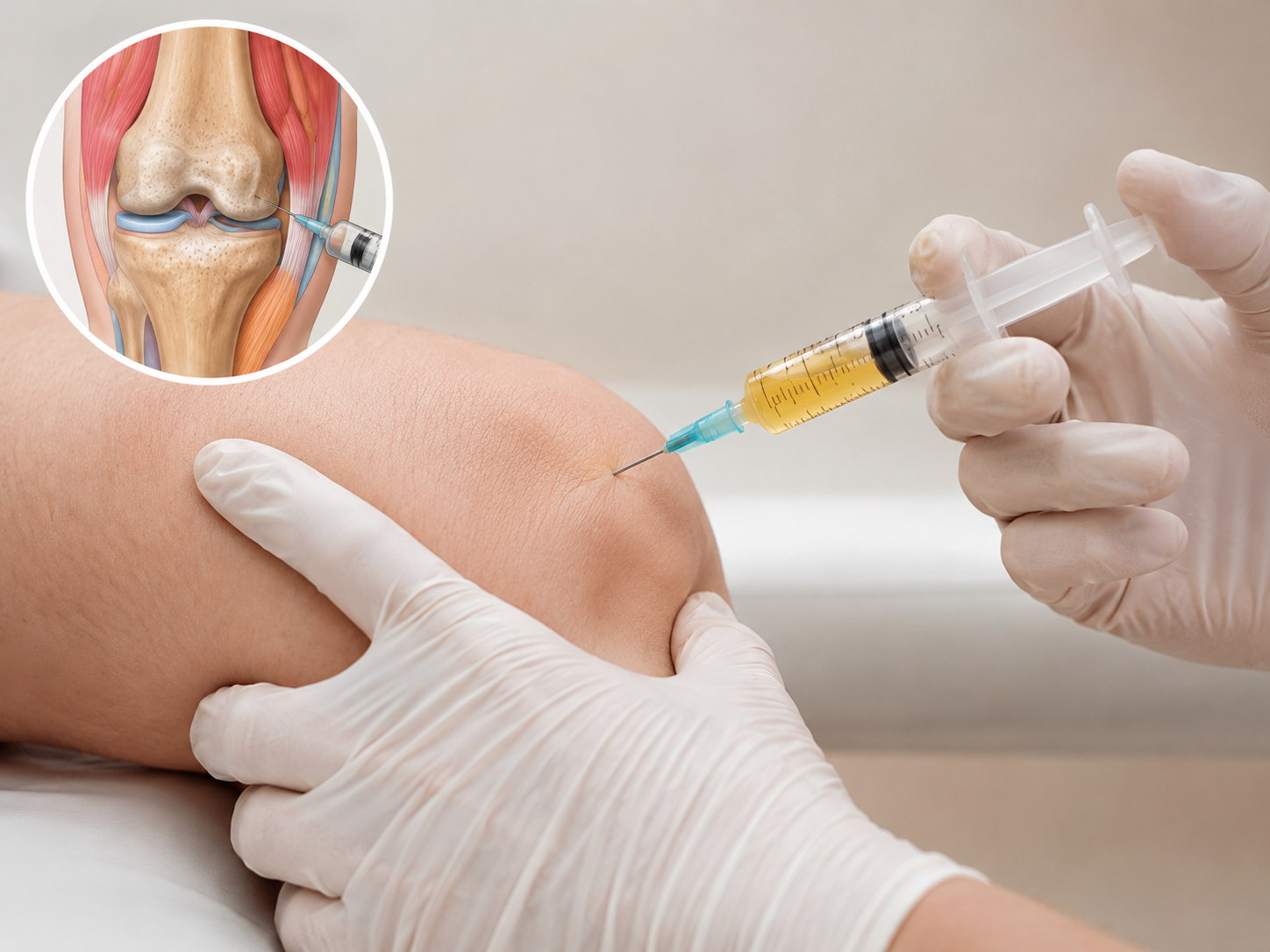
They are injections intended to modulate pain and inflammation.
Regenerative medicine includes different procedures that use products derived from the patient’s own blood or biocompatible substances to act on the joint environment.
Their main goal is to reduce pain, modulate inflammation and help improve function. They do not regenerate a severely destroyed joint or replace a joint replacement when this is clearly necessary.
When to consult
The indication depends on the diagnosis and degree of joint wear.
Consult if:
- You have persistent joint pain despite conservative treatment.
- There is mild or moderate osteoarthritis and you want to assess non-surgical options.
- You have knee, hip, shoulder or ankle pain that limits activity.
- You want to know whether an injection may help before considering surgery.
- You need a realistic assessment of benefits and limitations.
Realistic expectations
Not all joint pain responds in the same way.
These therapies may help reduce pain and inflammation in certain patients, but their effect depends on the degree of osteoarthritis, the affected joint, weight, activity level and the overall condition of the tissue.
In advanced osteoarthritis, major deformity or severe cartilage loss, the best option may still be joint replacement surgery. This is why each case must be assessed with imaging tests and clinical examination.
Frequently asked questions about regenerative medicine
Not always. In advanced osteoarthritis, surgery may still be the most effective option.
It depends on the type of treatment, the joint and the protocol indicated in each case.
They are usually well tolerated. Local discomfort may occur after the injection.
Response varies. Some patients improve within weeks, while others have a more limited response.
Medical assessment
Would you like to know if a biological treatment could help you?
We review your symptoms, physical examination and imaging tests to assess whether an injection may make sense in your case or whether other options are more appropriate.